Unstraight memories
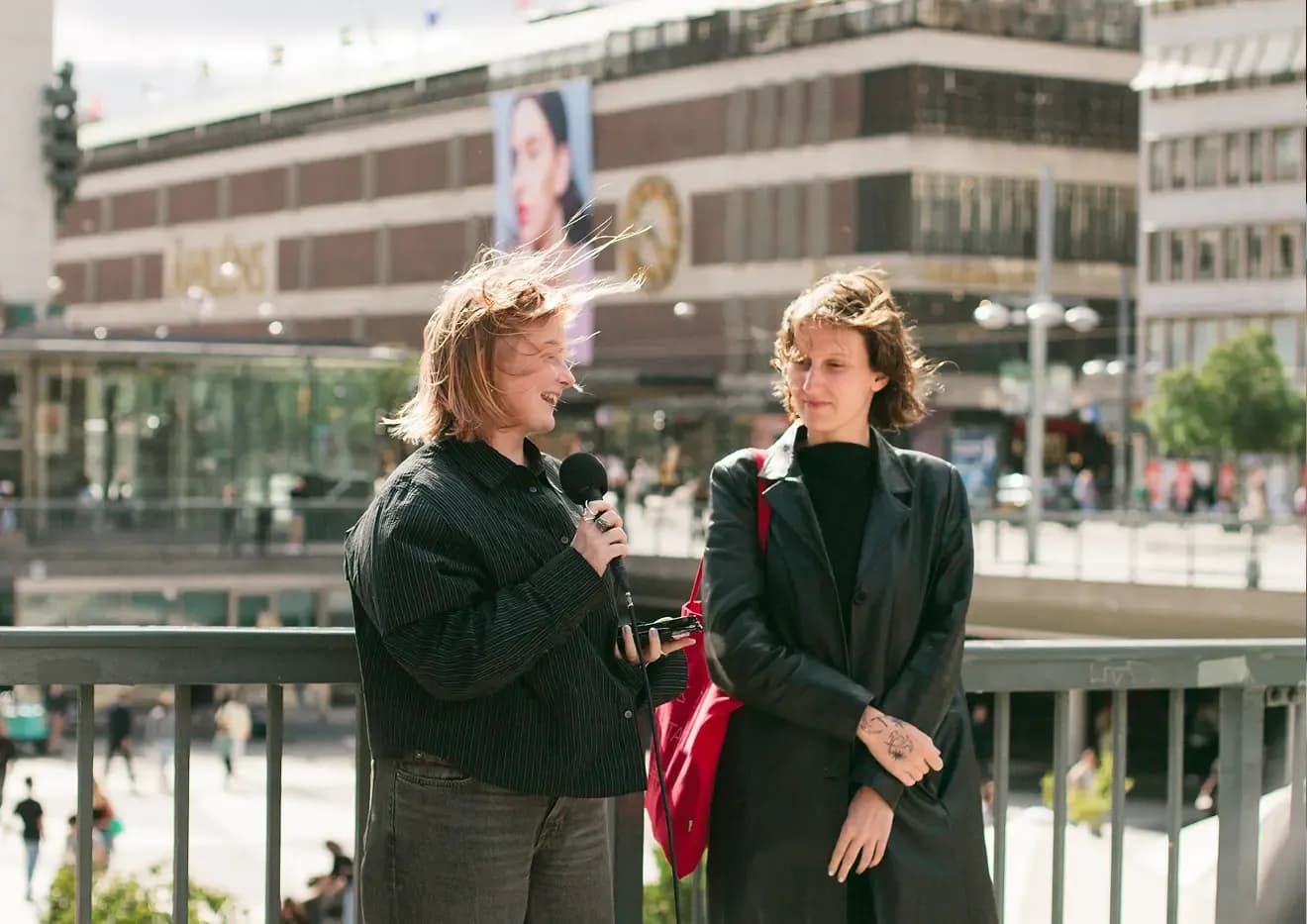
The Unstraight Museum is an LGBTQI organisation that collects and showcases queer history. For their exhibition Unstraight Memories at Sergels torg, they used their existing archive tool from Museum.link as the basis for curating and publishing the material, with technical support and custom solutions to bring it to life in both physical and digital form.
The Unstraight Museum – the archive that took over Sergels torg
The Unstraight Museum is an LGBTQI organisation that collects, preserves and showcases queer history from Sweden and the rest of the world. Its digital archive holds hundreds of pictures, texts and objects – stories that must not be forgotten.
For several years Museum.link has been the museum's archive partner, providing the digital database that forms the basis of its collection.
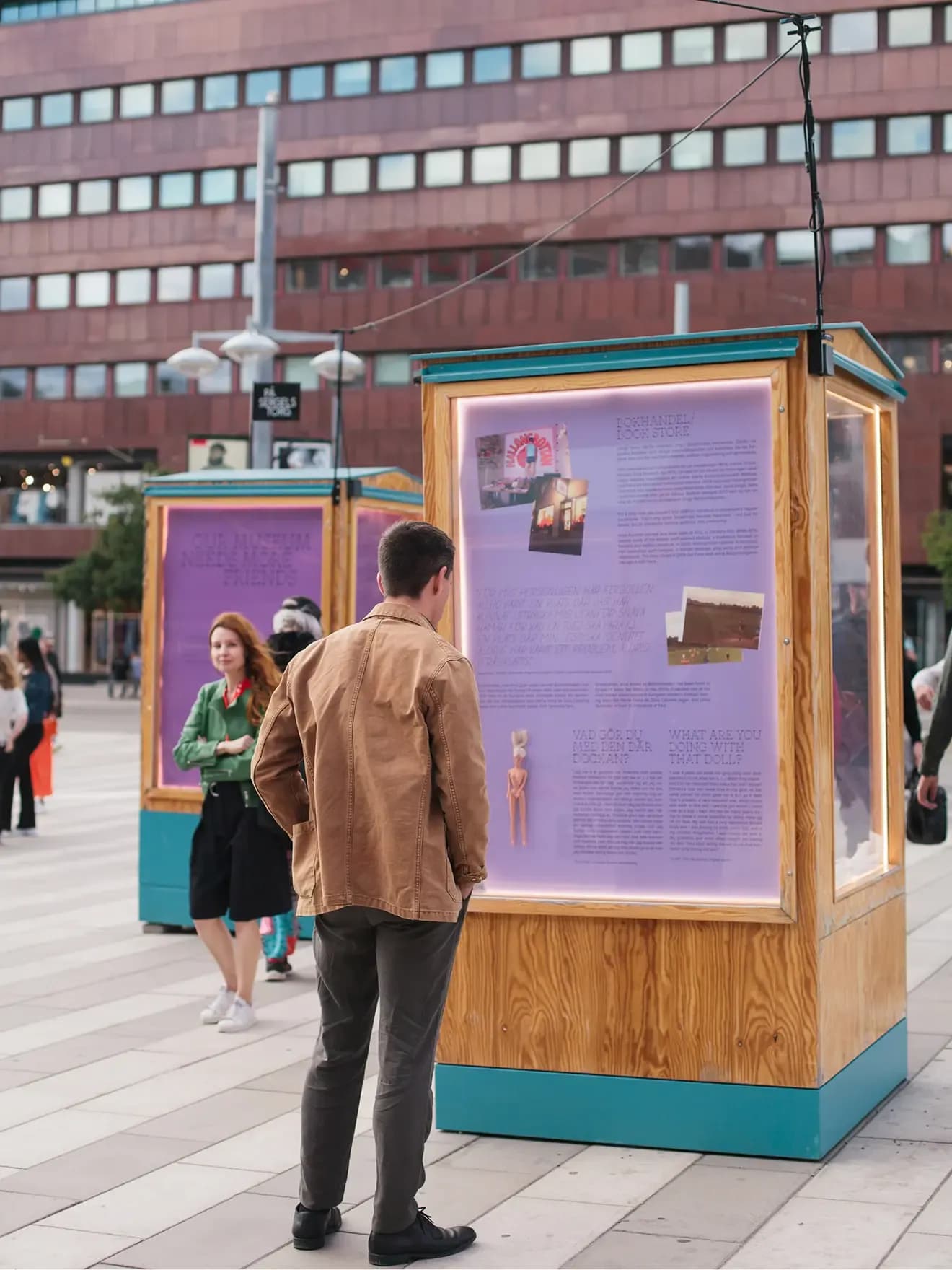
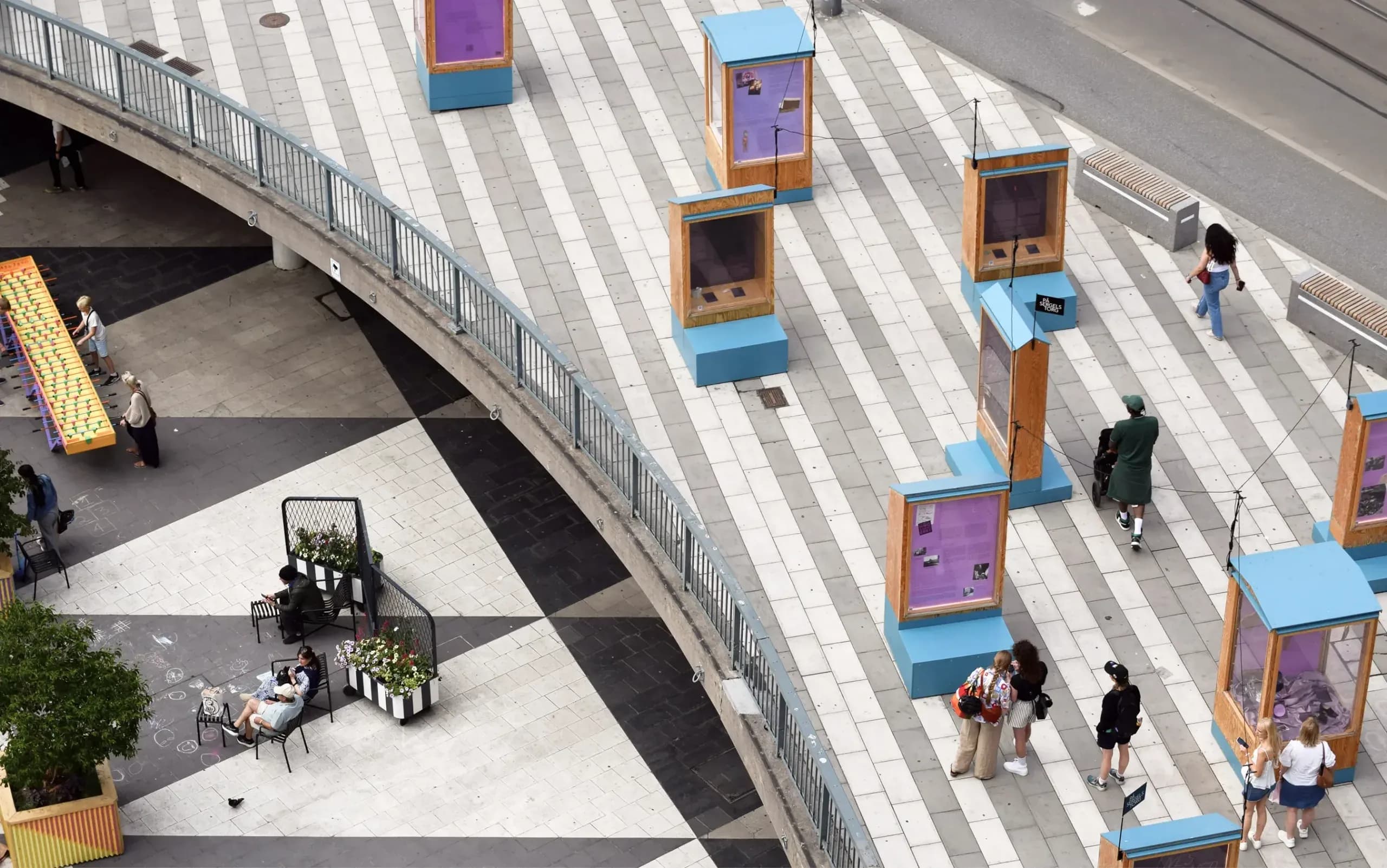
In July 2025 the archive took physical shape in the outdoor display cases at Sergels torg in Stockholm, through the exhibition Unstraight Memories, which showed the city's queer history.
From database to the heart of the city
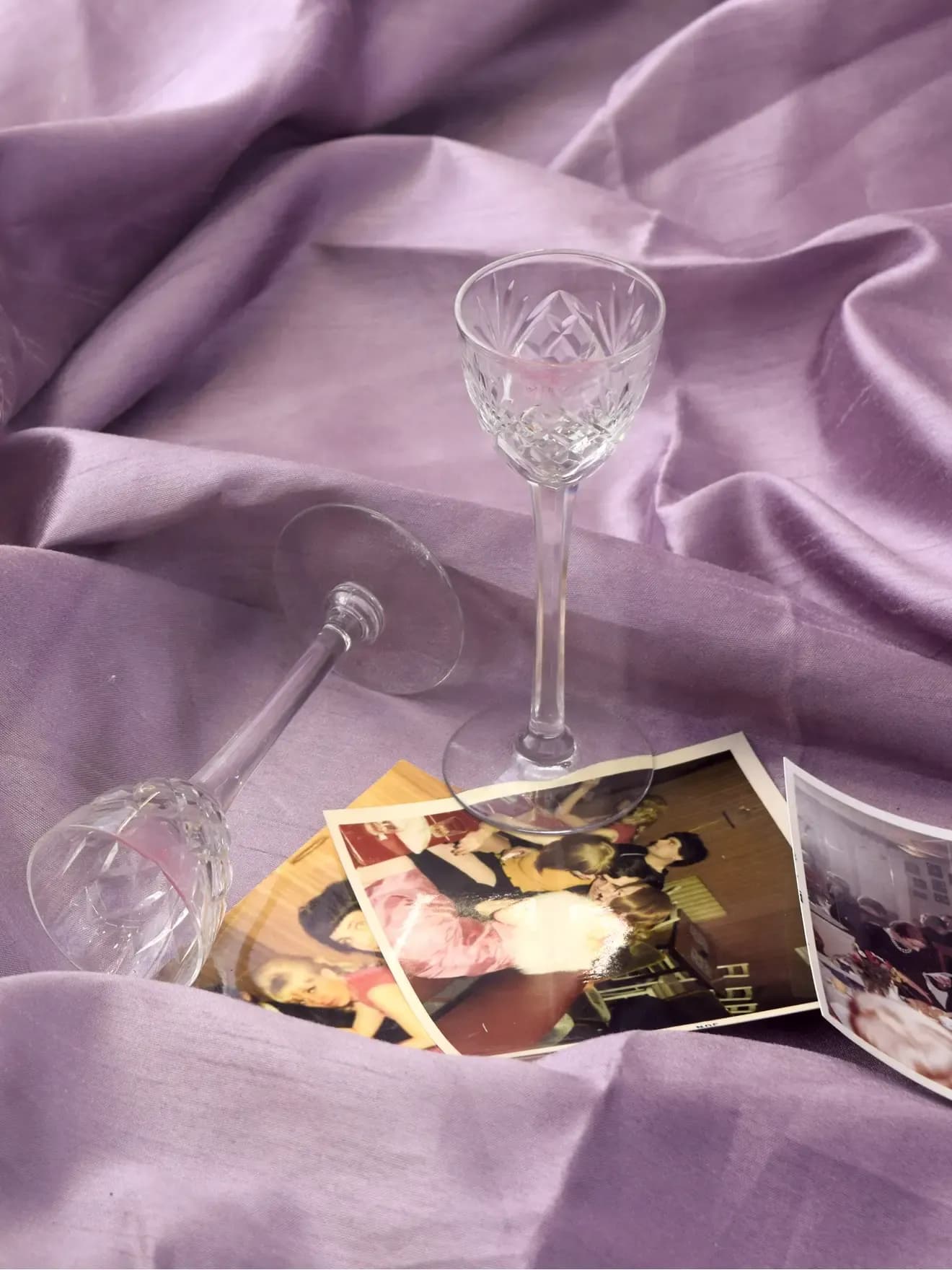
The exhibition was curated directly from the archive database. Together with Studio Dim, the museum went through the roughly 700 files in the collection. The selection process was made easier by the archive's search and filtering, which made it possible to sort material by theme, time, place and content.
Once the objects had been chosen, they were brought into the exhibition in several ways. The curators could:
- pull metadata such as titles and descriptions directly from the archive
- download high-resolution original files for print, thanks to uncompressed storage
- identify physical objects in the collection that needed to be brought out
The digital archive thus worked both as a curatorial tool and as a reference for the museum's physical objects.
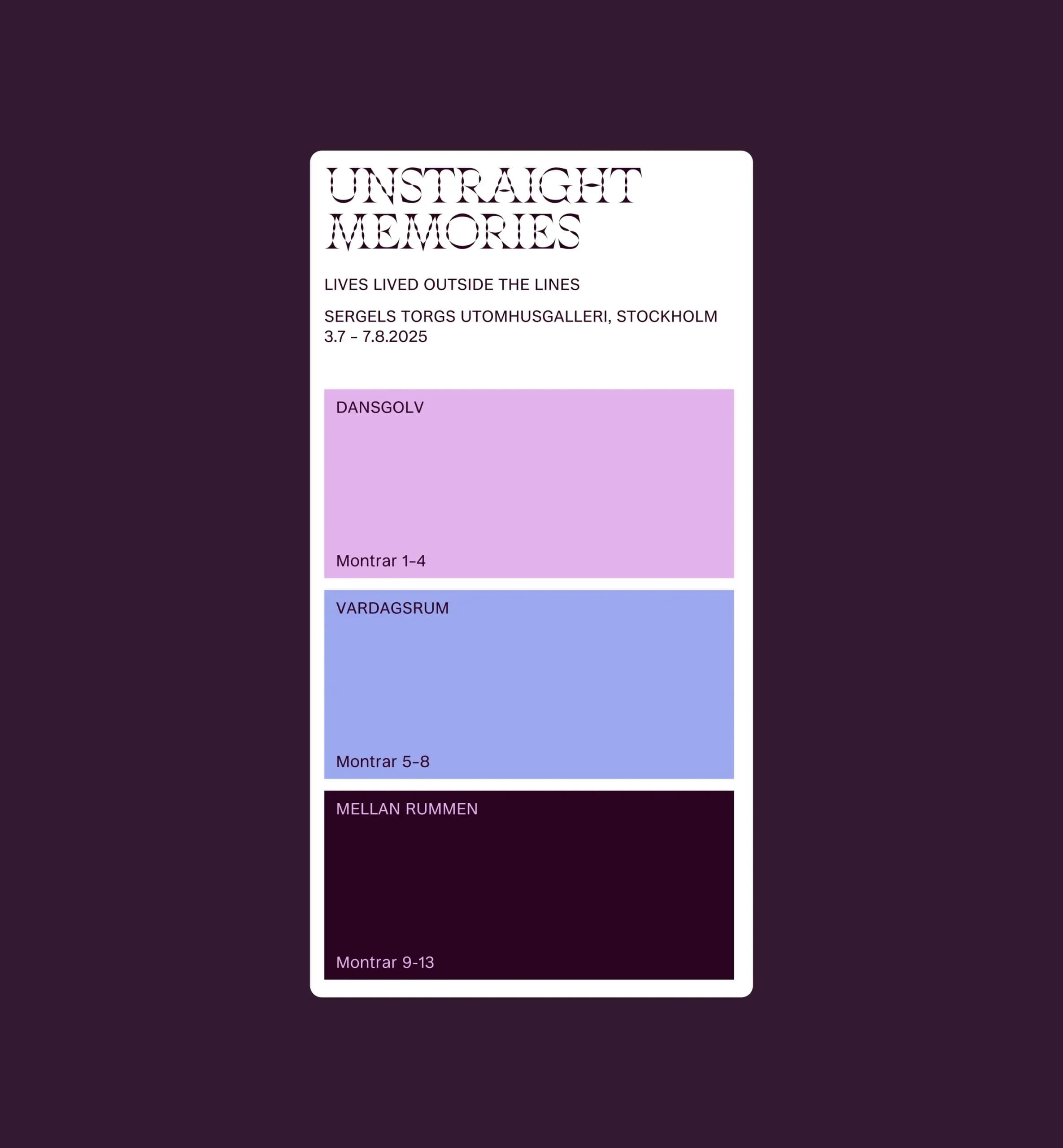
An exhibition platform connected to the archive
To complement the physical exhibition, a digital platform was also developed. Using Museum.link's tools and hosting environment, a dedicated exhibition site could be built and connected directly to the existing database.
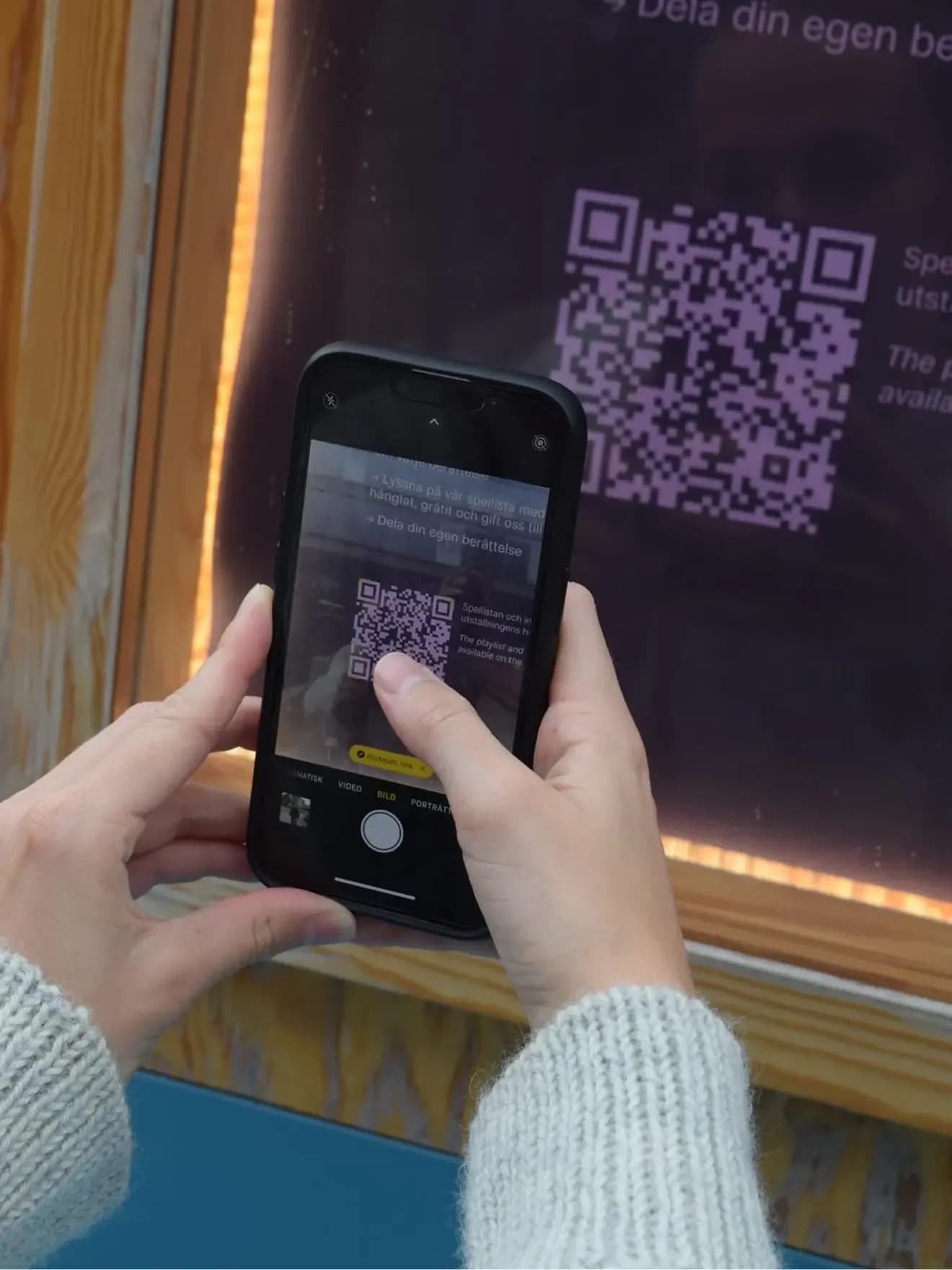
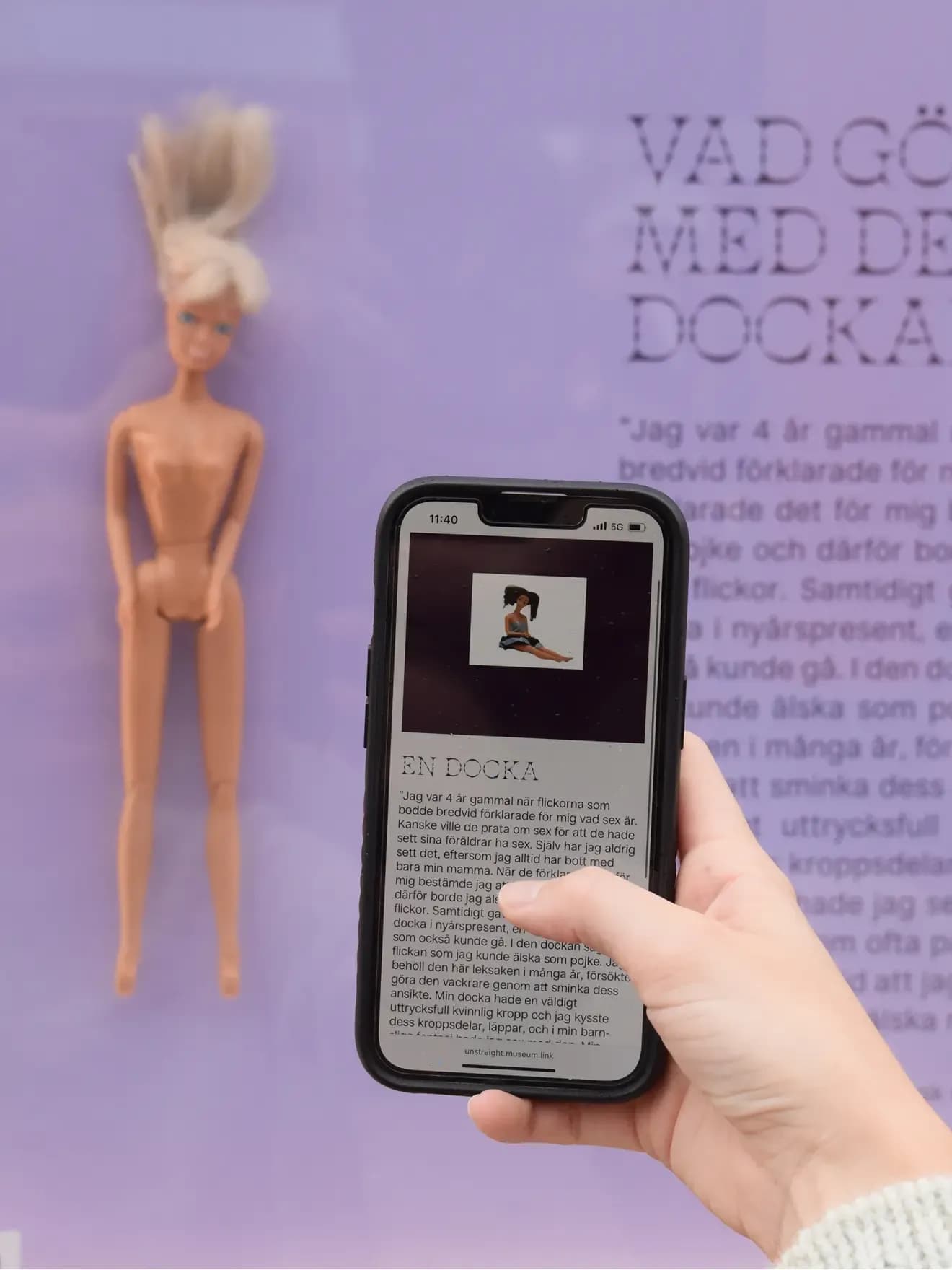
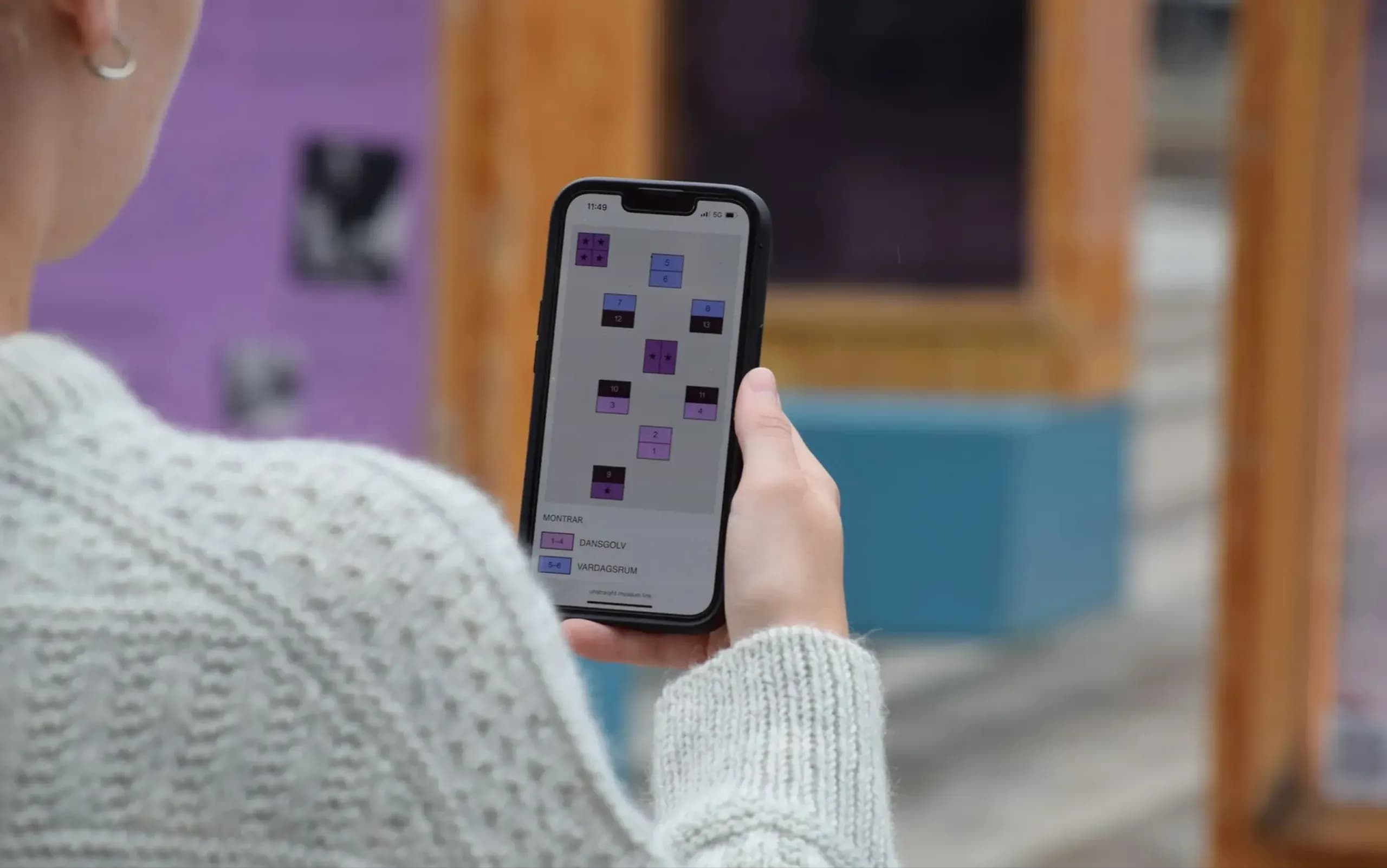
Through the exhibition platform, visitors could scan QR codes to read more about the objects and easily move between objects and language versions. The digital environment created a close link between the physical space and the archive's content.
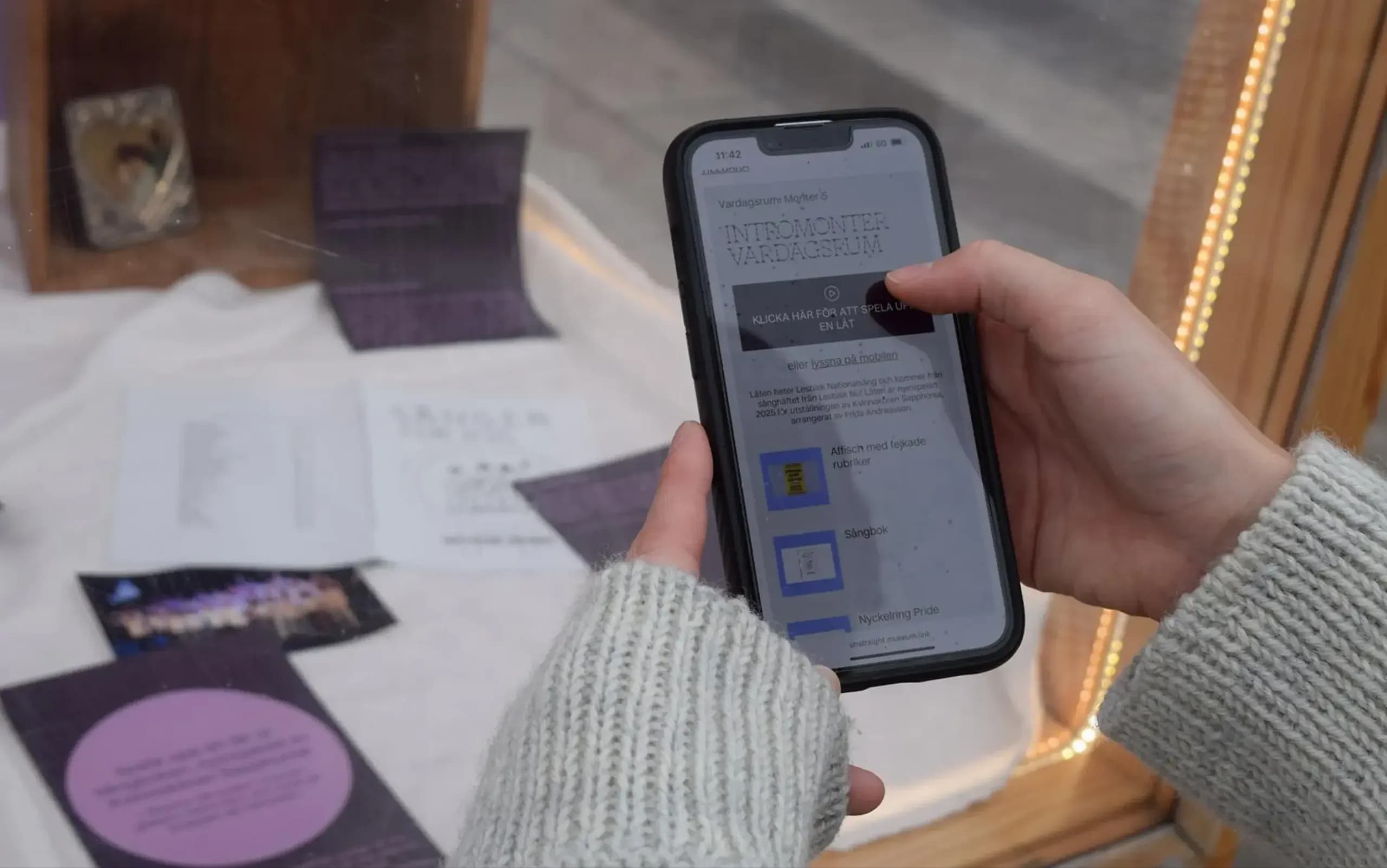
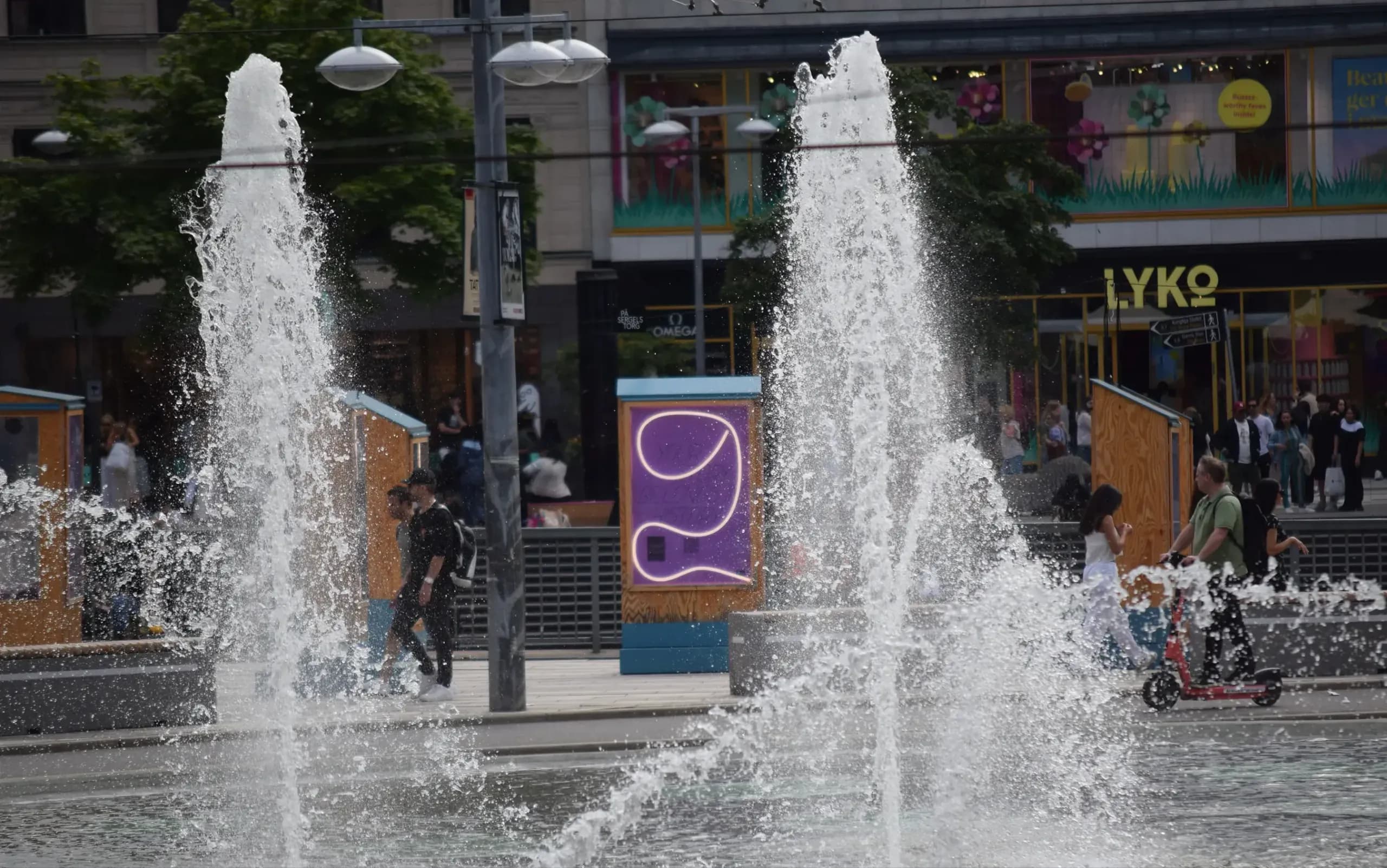
Museum.link also helped with technical integration on site and on the web to connect special installations to the exhibition platform. Through these solutions, visitors could trigger different features in the display cases from the web interface – in one case a song started playing across the square, in another a disco ball lit up.
An archive that grows in real time
Through the exhibition website, visitors could also submit their own stories directly to the archive. Each submission lit up a light tube in the display case at Sergels torg – a physical sign that the archive was growing in real time.
The contributions went straight into the database and became part of The Unstraight Museum's collection. This created a strong link between the place, the story and the future, where visitors did not just take part in history but also contributed to it.
Accessibility and orientation
In addition to the interactive features, the web platform also had practical functions, such as a map of the exhibition that made it easier for visitors to find their way between the display cases on the square. Museum.link's environment gave The Unstraight Museum what it needed to create a more accessible and user-friendly visitor experience.
Result – a coherent digital infrastructure for cultural heritage
With Museum.link's digital archive and technical environment, The Unstraight Museum could use its existing archive as the basis for a public exhibition while the collection kept growing.
The solution shows how a digital archive can be more than storage: a curatorial tool, a publishing platform and interactive infrastructure for physical exhibitions. For heritage organisations, it is a chance to preserve material for the long term, make it publicly available and create new forms of participation – all within the same coherent system.